
Lakewood Wood Flooring provides subfloor repair in Lakewood, CA, drawing on more than 20 years of wood flooring work, and serving surrounding cities including Artesia, Bellflower, Hawaiian Gardens, Cerritos and Signal Hill. When a floor sags, bounces or goes soft underfoot, we trace the problem down through the finish floor to the subfloor and the joists before anyone prices new flooring.
The subfloor is the layer of boards or plywood that the finish floor is fastened to, resting on the floor joists. When it rots, delaminates or loses its fasteners, every floor on top of it suffers: hardwood squeaks and gaps, tile cracks and vinyl telegraphs every seam. Fixing the finish floor without fixing what lies below only hides the problem for a while.
We repair subfloor and flooring-scale framing ourselves and refer larger structural work out. Our estimate lists removal, subfloor replacement, joist work and the finish floor as separate lines, so you can see exactly what the repair involves before it starts.
Signs the Problem Is Below the Floor
Soft Spots and a Floor That Gives
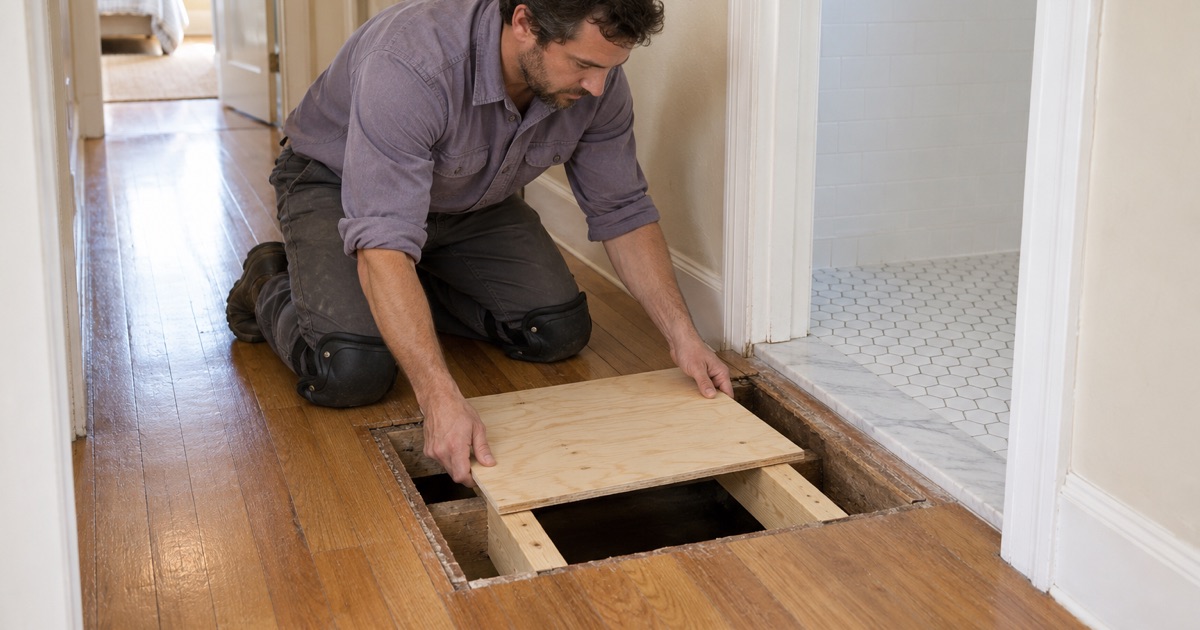
A soft spot that gives underfoot usually means the subfloor has rotted or delaminated in that area. It is most common near kitchen sinks, dishwashers, toilets, tubs and water heaters, where slow leaks have soaked the wood over months or years.
We open the area, probe the surrounding subfloor to find where sound wood begins, and replace everything that has lost strength. Patching only the softest spot tends to leave a weak ring around the repair that fails later.
Sagging and Bouncy Floors
A floor that sags or bounces between walls points to the framing. The joists may be undersized for their span, notched or cut by past plumbing work, cracked, or weakened by moisture or termites.
We check joist size, spacing and condition from the crawl space where one exists. Where stiffening the floor is within a flooring repair, we sister joists or add blocking; where it is structural beyond that, we refer the work to the right trade before the floor is closed up.
Persistent Squeaks and Movement
Squeaks that return after a finish floor is refastened usually come from the subfloor moving on the joists. Old nails lose their grip as the wood dries and shrinks over decades, leaving boards free to rub.
We refasten the subfloor to the joists with screws or construction adhesive where it has come loose, and we correct gaps between the subfloor and the top of a joist with shims. That stops the movement at its source.
Subfloor Types in Lakewood Homes
Board Subfloor on Raised Foundations
Many homes built in the late 1940s and 1950s were framed with a board subfloor: individual planks laid across the joists, often diagonally, and nailed at each crossing. The Lakewood Story describes one worker nailing the subflooring for five houses each day during the Lakewood Park building boom.
Board subfloors can last a long time, but individual boards split, rot at leak points and loosen at the nails. We replace damaged boards with matching thickness or with plywood tied into the surrounding boards, so the finish floor above sits flat across the repair.
Plywood and OSB Underlayment
Later additions and remodels often use plywood or OSB sheets over the joists or laid over an older board subfloor as underlayment. These sheets can delaminate when wet, swelling at the edges and leaving ridges under the finish floor.
We cut out damaged sheets back to the nearest joists, install new panels of matching thickness, and fasten them on the correct schedule. We also check that panel seams land on framing, because an unsupported seam is a common source of bounce.
Slab-on-Grade Floors
Homes on a concrete slab do not have a wood subfloor, but they can still have problems below the finish floor: cracks, uneven areas and moisture coming up through the concrete. We test the slab for moisture with a calcium chloride test or an ASTM F2170 in-situ relative humidity test, and level or repair it as needed before new flooring.
Water, Termites and Hidden Damage
Leak Damage Under the Floor
A dishwasher supply line, a water heater or an aging pipe under the house can soak the subfloor long before anyone sees water above. We trace the leak, measure moisture with a wood moisture meter, and make sure the source is fixed and the wood has dried before repairing.
We photograph the damage and record moisture readings for your insurer, and we write the subfloor repair as separate lines on the estimate so it is clear what the claim covers.
Termite Damage to Subfloor and Joists
Subterranean termites often attack the subfloor and joists from below, while drywood termites can damage framing and floorboards directly. Once the treatment or fumigation is complete, we remove damaged wood and replace or reinforce it.
The City of Lakewood’s rehabilitation loan program for eligible owner-occupants lists repair of termite damage and flooring repair among the work it covers. We provide the written estimate the application asks for.
Crawl Space Moisture and Ventilation
On a raised foundation, a damp crawl space keeps the subfloor and joists wet even when there is no active leak. We check for standing water, blocked vents and wet insulation, and point out what needs fixing so the new subfloor does not fail the same way.
Rebuilding for the Finish Floor
Flat, Stiff and Ready for Hardwood
Hardwood needs a subfloor that is flat, dry and firmly fastened. After repairs, we check flatness across the room, sand or fill high and low spots, and confirm moisture readings are in range before the finish floor goes back down.
Relaying and Weaving In the Finish Floor
Where the original hardwood was lifted to reach the subfloor, we relay the good boards and weave in matching new boards where needed. The area is then sanded and refinished so the repair disappears into the floor around it.
- 20+ Years in Wood Flooring
- Line-by-Line Written Estimates
- Lead-Safe Sanding on Pre-1978 Homes