Wood Flooring Contractor in Lakewood, CA

Refinishing, repair and new hardwood for the 1950s houses of Lakewood, with moisture readings and a line-by-line written estimate before any work starts.

Lakewood Wood Flooring brings more than 20 years of wood flooring experience to homeowners in Lakewood, CA, covering hardwood floor refinishing, repair, water damage work, subfloor repair, stairs and new hardwood installation. Our work is shaped around the houses this city actually has: more than half of Lakewood’s homes were built in the 1950s, and many of them still hold their original oak under carpet, linoleum or tile.

That changes the first conversation. Before anyone talks about tearing a floor out, we look at what is already there, measure the moisture in the wood and in any concrete, and check the subfloor and joists underneath. A floor that bounces, squeaks or cups is usually telling you something about what sits below it, and pricing a new surface without reading that first is how a new floor ends up with the same problem.

Every job is priced on a line-by-line written estimate, and every finish we apply is one that meets the South Coast air basin rules. Whether you are restoring a 1950s floor, repairing a leak, replacing carpet with hardwood or preparing a house for sale, you get the readings, the plan and the price in writing before work begins.

Get Your Free Quote

Fast response • No obligation

So we can reach you about your request.

So we can send you a confirmation after you submit this inquiry form.

  • 20+ Years in Wood Flooring
  • Line-by-Line Written Estimates
  • Lead-Safe Sanding on Pre-1978 Homes

What we do

Our Services

Hardwood floor refinishing, repair and installation for Lakewood, CA homes

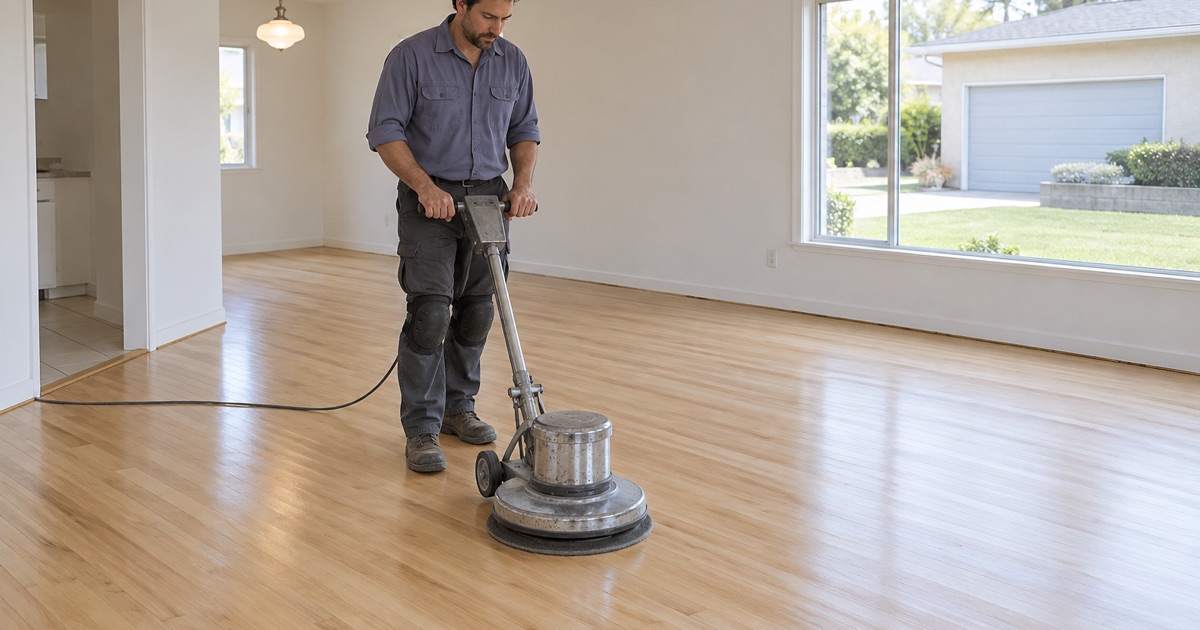
Worker drum-sanding the old finish off a hardwood strip floor in the dining room of a Lakewood tract house.

Wood Floor Refinishing

Sanding, staining and new finish coats for hardwood floors, from a light screen and recoat to a full return to bare wood.

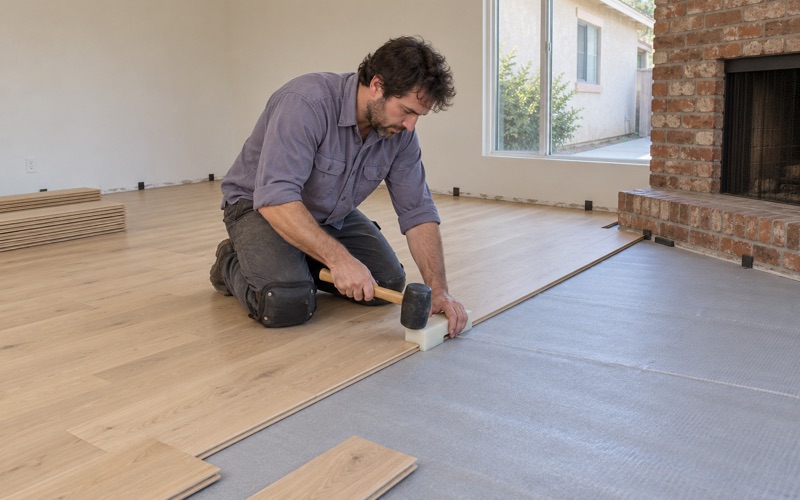
Worker tapping a wide engineered white oak plank tight into a floating floor in a Lakewood family room.

Engineered Hardwood Flooring

Engineered hardwood selected for your foundation and moisture readings, then installed nail-down, glue-down or floating with the right expansion gaps.

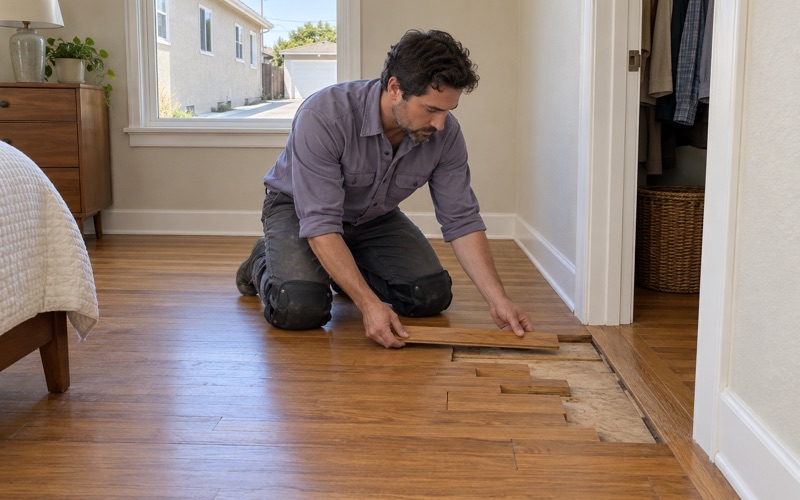
Worker lowering a matching replacement strip into a staggered weave-in repair in a Lakewood bedroom floor.

Hardwood Floor Repair

Board replacement, squeak and gap repair, cupping diagnosis and pet stain removal, with new wood woven into the existing floor so the fix blends in.

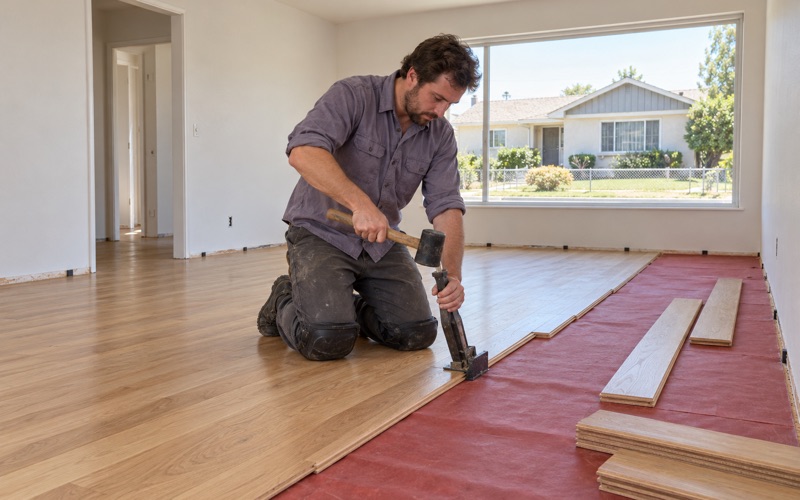
Worker nailing a new white oak strip through its tongue with a manual flooring nailer in a Lakewood living room.

Hardwood Floor Installation

New solid and engineered hardwood installed over tested subfloors and slabs, with species, layout and installation method matched to your home.

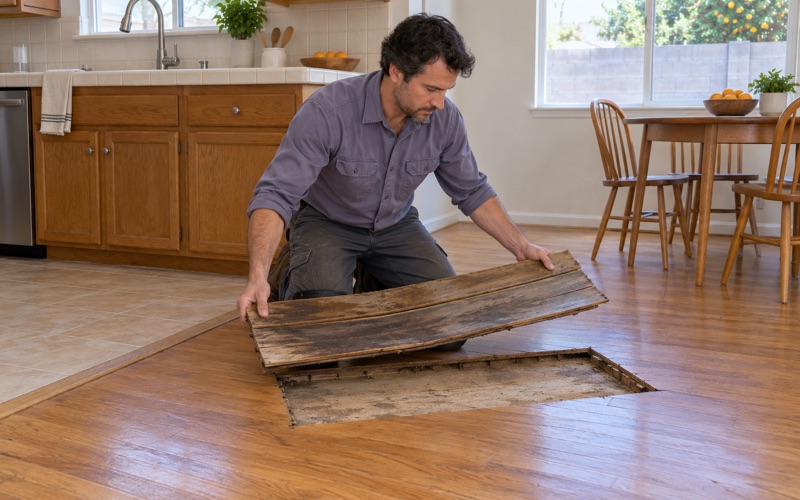
Worker lifting out a cut section of cupped, water-stained hardwood near a kitchen sink in a Lakewood house.

Hardwood Floor Water Damage

Wet and cupped hardwood assessed, documented with moisture readings and photos, and repaired or replaced once the leak is fixed and the floor has dried.

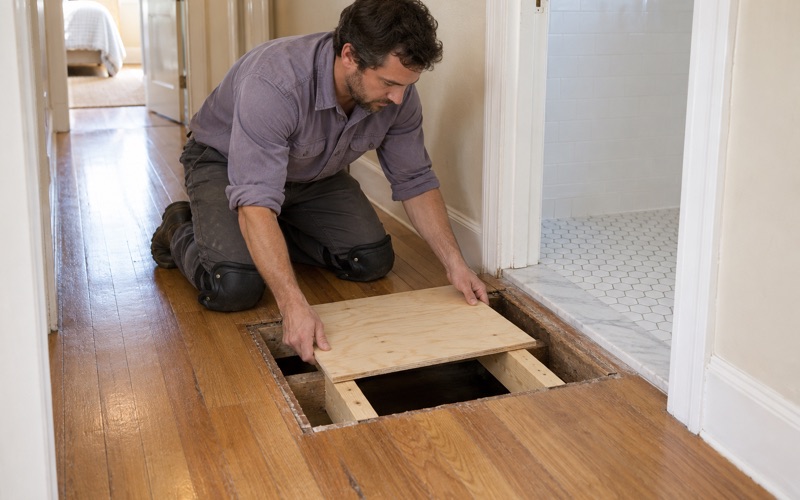
Worker lowering a new plywood subfloor patch onto the joists under an opened bathroom-doorway floor in a Lakewood house.

Subfloor Repair

Soft spots, sags and bounce traced to the subfloor and joists, with rotted boards replaced and framing reinforced before new flooring goes in.

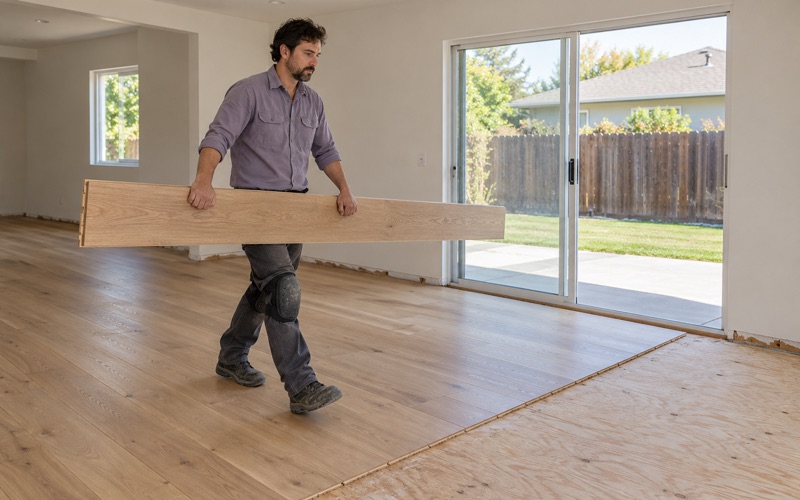
Worker carrying a long wide white oak plank to the leading row of a new wide plank floor in a Lakewood great room.

Wide Plank and Herringbone Flooring

Wide plank hardwood and patterned floors, including herringbone, chevron and parquet, laid out from the room's center line over moisture-tested subfloors.

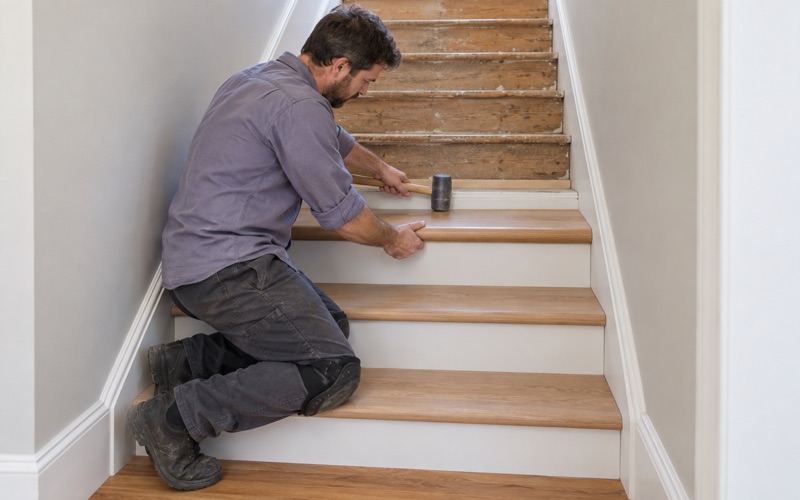
Worker seating a new white oak stair tread with a rounded bullnose edge on a carpet-free staircase.

Hardwood Stairs

Hardwood stair treads, risers and nosing installed, replaced or refinished, with carpeted stairs converted to wood and every step priced on its own line.

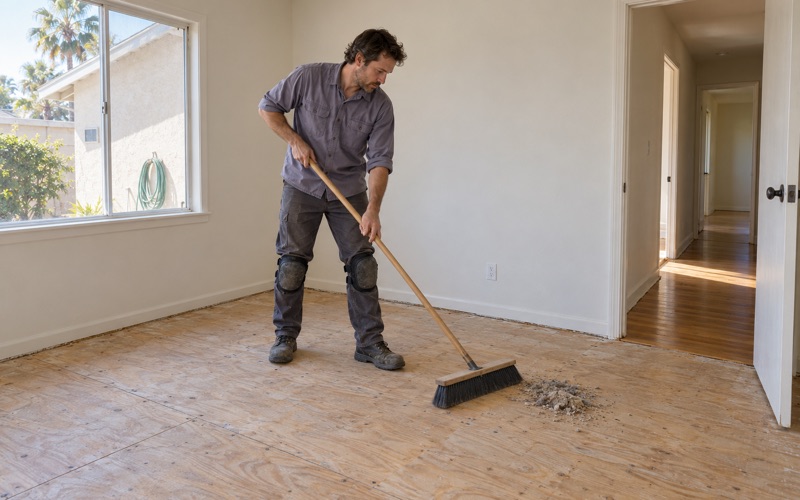
Worker sweeping a bare plywood subfloor clean after the carpet came up, ready for new hardwood in a Lakewood bedroom.

Replace Carpet With Hardwood

Carpet taken up, original hardwood checked for and refinished where it exists, or new hardwood installed over a repaired, moisture-tested subfloor.

A Lakewood Flooring Contractor With Two Decades on the Job

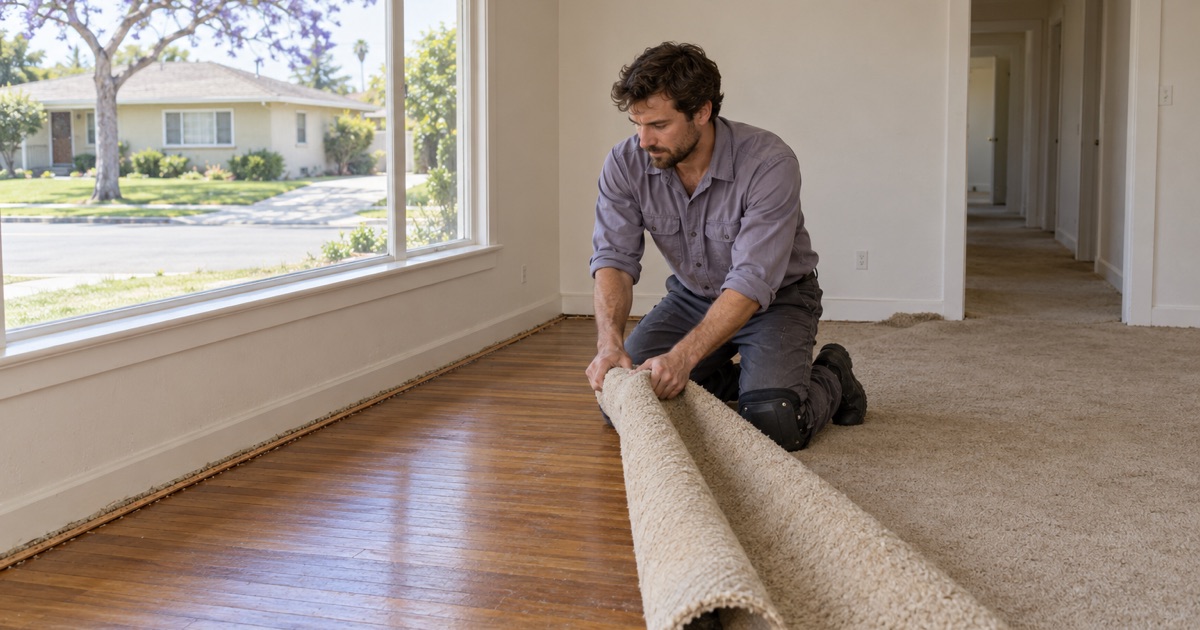
Worker folding back old wall-to-wall carpet to uncover the original 1950s hardwood strip floor in a Lakewood living room.

More Than 20 Years of Wood Floor Work

We have spent more than 20 years sanding, repairing and installing wood floors. That time is why we read a floor before we price it: the pattern of a cup, the line of a gap or the spot where a board gives underfoot usually points to a cause, and fixing the cause is what keeps the new finish or the new boards from failing the same way.

Why Choose Lakewood Wood Flooring

Old Floors Assessed First

Every Lakewood house built in the Lakewood Park years was sold on the promise of hardwood floors, so we pull back a corner of carpet or linoleum and read the original oak before recommending anything new, rather than quoting a full replacement for a floor that only needed sanding.

Subfloor and Joists Checked

No finish floor gets priced over a soft or bouncy spot until we have traced it down to the subfloor and the joists, so a hidden board subfloor failure or an undersized span is found now rather than showing up as a new squeak months later. Structural work beyond a flooring job is referred out.

Asbestos Treated as a Question

Old linoleum, rubber tile, 9x9 tile and black mastic are never scraped or sanded until an asbestos survey has answered whether they contain it, so a kitchen floor from 1952 does not become an airborne hazard rather than a routine removal.

Moisture Measured and Written Down

Before material is ordered, we take readings in the existing wood and, on a slab, run a calcium chloride or ASTM F2170 relative humidity test, so boards are laid into a known condition rather than cupping a season later because nobody measured.

Only coatings under the 275 g/L wood-coating limit in SCAQMD Rule 1113 go on a floor we finish, so your new sheen is legal to apply in Lakewood and you are not left with a product a compliant contractor would never have opened.

When the Floor Tells You Something Is Wrong

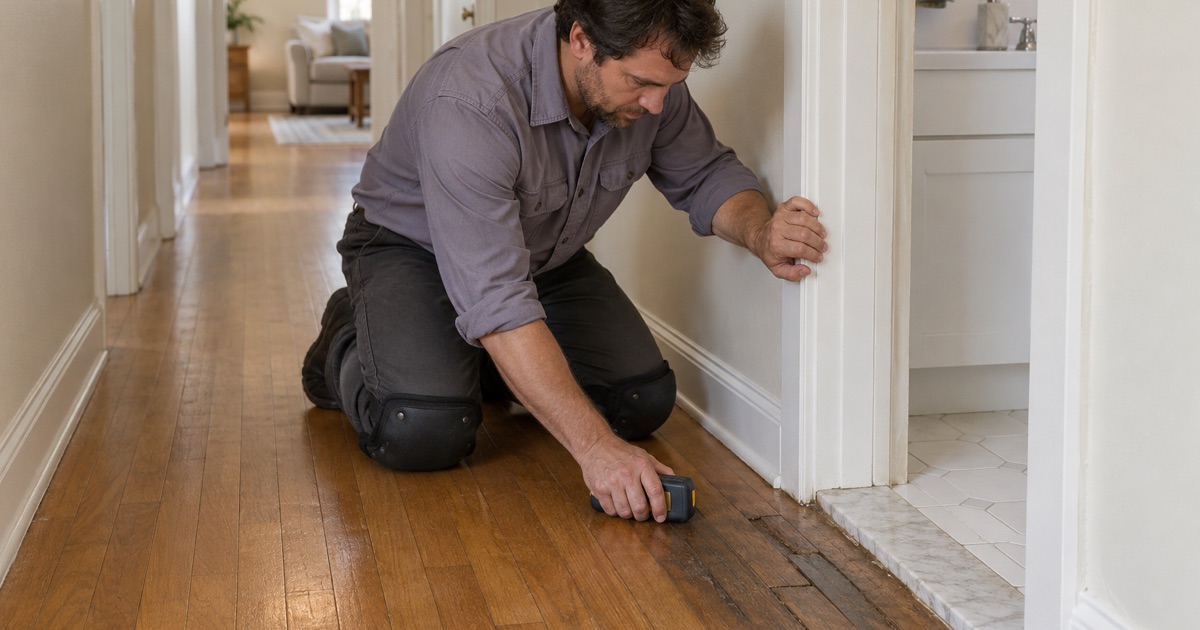
Worker pressing a moisture meter to darkened hardwood boards beside a hall bathroom doorway in a Lakewood house.

Cupping, Crowning and Buckling in Hardwood

Cupping is when board edges rise above the centers, crowning is the reverse, and buckling is boards lifting off the subfloor entirely. Each one points to moisture moving through the wood in a different way, so we measure moisture content across the room before deciding whether the floor needs drying time, sanding or replacement.

Gaps Opening Between Floorboards

Seasonal gaps that open in dry months and close in humid ones are normal wood movement, while gaps that keep widening point to a moisture or fastening problem. We read which kind you have, and we fill, repair or leave the gaps alone accordingly, so you are not paying to fill a gap that will crack its filler next summer.

Squeaks and Popping Underfoot

Squeaks, pops and cracking sounds come from boards rubbing against each other or against loose fasteners and nail pops. We locate the source from above or from the crawl space and refasten the boards to the subfloor or joist, which quiets the floor without tearing it up.

Sagging or Bouncy Floor Between Joists

A sagging or bouncy floor between the joists usually means a weak subfloor, an undersized span, or joists that have lost strength to moisture or termites. We check the framing before quoting any new finish floor, because laying new wood over a soft section only hides the problem for a while.

Soft Spots in the Subfloor

A spot that gives underfoot is often a board subfloor that has rotted or delaminated, frequently near a kitchen sink, a bathroom or a water heater. We open the area, find the extent of the damage, and replace the subfloor section so the finish floor above has solid support.

Water From Dishwashers, Water Heaters and Pipes

A slow dishwasher supply line leak, a failing water heater or an aging pipe under a raised foundation can soak a floor long before anyone sees water. We trace the water to its source, document it with photos and moisture readings, and plan the drying and repair around what the readings show.

Termite Damage in Boards and Joists

Drywood termites leave frass and hollowed boards, while subterranean termites can weaken joists from below. Once the fumigation or treatment is done, we remove damaged boards, repair or sister affected joists where it is a flooring-scale fix, and weave new wood into the existing floor.

Pet Urine Stains in the Wood

Pet urine that sits long enough soaks past the finish and turns the wood dark gray or black. Light surface staining can sometimes be sanded out, but deep staining usually means cutting out the affected boards and weaving in new ones, and we tell you which case you are in after we sand a test area.

Slippery Floor Finish After Cleaning

Some cleaning products, oil soaps and waxes leave a residue that makes a finished floor slick and blocks any future recoat from bonding. We test the surface, remove the contamination where possible, and plan a screen and recoat or full refinish depending on how deep the residue has gone.

Peeling or Worn-Through Finish

Peeling polyurethane often comes from a recoat applied over contamination or without proper abrasion between coats, while worn-through traffic lanes simply show age. We decide whether a screen and recoat will bond or whether the floor needs to go back to bare wood before any new finish.

Bringing Back a 1950s Lakewood Floor

Worker buffing between finish coats on a sanded 1950s hardwood floor in a Lakewood tract house living room.

Finding Hardwood Under Carpet

Many Lakewood homes have original oak strip flooring hidden under wall-to-wall carpet, often in good condition apart from tack strip holes and staples. We pull back a corner, confirm the species and thickness, and quote a refinish instead of a replacement when the wood is there.

Finding Hardwood Under Old Linoleum

The original Lakewood Park kitchens were advertised with inlaid linoleum, and some owners later found hardwood beneath it or beneath later layers. Because old linoleum, its backing and the black mastic under it can contain asbestos, we arrange testing before removal and only then assess the wood underneath.

Restoring a 70 Year Old Hardwood Floor

A floor laid when the tract was built in the early 1950s has had seven decades of wear, recoats and repairs. We check board thickness above the tongue, replace boards that cannot be saved, refasten loose sections, and sand only as deep as needed, so the floor keeps enough wood for future refinishing.

Full Sand and Refinish Against Screen and Recoat

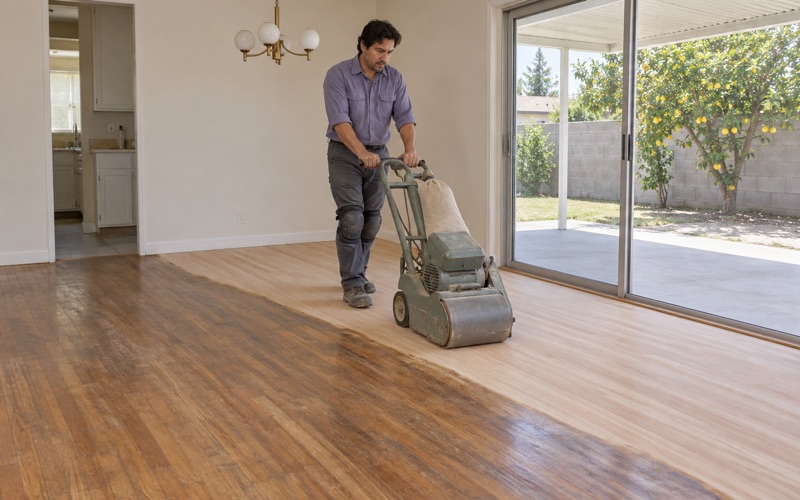
A screen and recoat lightly abrades the existing finish and adds a fresh coat, which works when the wood itself is undamaged and only the top layer is dull. A full sand and refinish takes the floor to bare wood with a drum sander, edger and grit sequence, and it is needed when stains, gray wood or deep scratches have gone through the finish.

How Many Times a Floor Can Be Sanded

Solid hardwood can usually be sanded many times, limited by how much wood remains above the tongue. Engineered hardwood depends on its wear layer thickness, and some thin wear layers allow only one refinish or none at all. We measure before sanding so we do not cut through what is left.

Stain Color Choices and Orange Oak

Old red oak and some oil-based finishes amber over time, which is why many older floors read orange. We sand test patches in the actual room, apply candidate stain colors, and let you choose under your own light, so blotchy stain or a color mismatch is caught before it covers the whole floor.

Waterborne and Oil-Based Polyurethane

Waterborne polyurethane dries clear, cures faster and stays closer to the natural wood color, while oil-modified polyurethane adds warmth and ambers over time. We explain how each looks on your species, how long each takes to cure, and which one suits your household before a coat goes down.

Low-VOC Finishes Under South Coast Air Rules

SCAQMD Rule 1113 limits wood coatings to 275 g/L of VOC throughout the South Coast air basin, which includes Lakewood. We use waterborne polyurethane, compliant oil-modified products and hardwax oil finishes that meet that limit, so your floor is finished legally and with less lingering odor.

Lead-Safe Sanding Before 1978

Almost every Lakewood house predates 1978, and sanding a floor near old painted baseboards and trim can release lead dust. We follow EPA Renovation, Repair and Painting rule work practices, contain the work area and use a dustless sanding system, so lead dust from sanding stays out of the rest of the house.

When You Can Walk on It and Move Furniture Back

Dry time and cure time are not the same, and the finish you choose sets both. We give you a written cure schedule showing when you can walk on the floor in socks, when furniture can go back with pads, and when rugs can go down, so a fresh finish is not marked on day two.

Putting In New Wood Floors

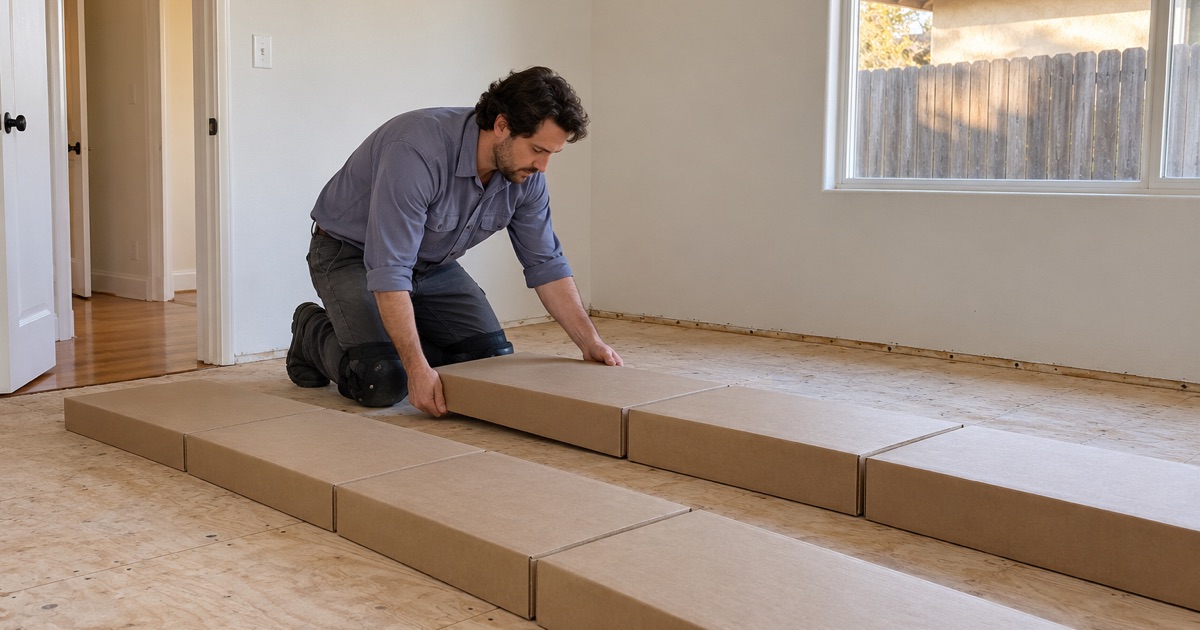
Worker setting down closed cartons of new white oak flooring to acclimate in a bedroom before installation in Lakewood.

Solid Against Engineered Hardwood

Solid hardwood is one piece of wood and can be sanded many times, while engineered hardwood has a real wood wear layer bonded to an engineered core that resists moisture movement better. We recommend based on your foundation type, the moisture readings, and how long you plan to keep the floor.

Replacing Carpet or Tile With Hardwood

Swapping carpet or tile for hardwood means removing the old floor, checking the subfloor for level and damage, and planning transitions at doorways. We handle all of it, add reducer strips or T-molding where heights change, and make sure the new floor meets existing surfaces cleanly.

Removing Old Linoleum and 9x9 Tile First

Older 9x9 tile and the black mastic under it may contain asbestos, and dry scraping can release fibers. We test before removal and follow SCAQMD Rule 1403 requirements when asbestos is present, so the removal step does not create a hazard under your new floor.

Hardwood Installation Cost per Square Foot

Published guides for the Los Angeles area put installer labor at roughly $3 to $9 per square foot, with material, subfloor repair, stairs and pattern work added on top. We price your job from measured square footage, the species and grade you choose, and the prep your floor actually needs, all written out line by line.

Wood Over Concrete and Moisture Testing

A slab-on-grade home can push moisture up into wood flooring and ruin it within a season. We run a calcium chloride test or an ASTM F2170 in-situ relative humidity test, and then specify the vapor retarder, adhesive or engineered product that suits the numbers, not a guess.

Matching New Boards to an Existing Floor

When a wall comes out or a room is added, new boards have to meet old ones without the join reading as a patch. We match species, width and grade, weave the new boards into the existing floor rather than butting them against a straight line, and refinish the whole area so the color blends.

Wide Plank, Herringbone and Chevron Layouts

Wide plank flooring shows grain and color more boldly, while herringbone and chevron patterns add movement and take more labor to lay out and cut. We plan the layout from the room’s center line so the pattern looks square to the walls you actually see.

White Oak, Red Oak, Hickory and Janka Hardness

The Janka hardness rating measures how well a species resists dents. White oak and red oak sit in the middle of the scale and take stain well, hickory is harder and more varied in color, and maple is hard but can stain unevenly. We match the species to your traffic, pets and the look you want.

Wear Layer Thickness on Engineered Floors

The wear layer is the real wood on top of an engineered board, and its thickness decides how many times the floor can be refinished in the future. We show you the wear layer of each product we recommend, so you are choosing a floor for its whole life, not just its first appearance.

Nail-Down, Glue-Down and Floating Installs

Nail-down installation uses cleat nails or flooring staples into a wood subfloor, glue-down bonds boards to a slab, and floating installation locks boards together over an underlayment. We choose the method your subfloor, foundation and product call for, and we leave the correct expansion gap at every wall.

Owning, Selling and Insuring a Lakewood Home

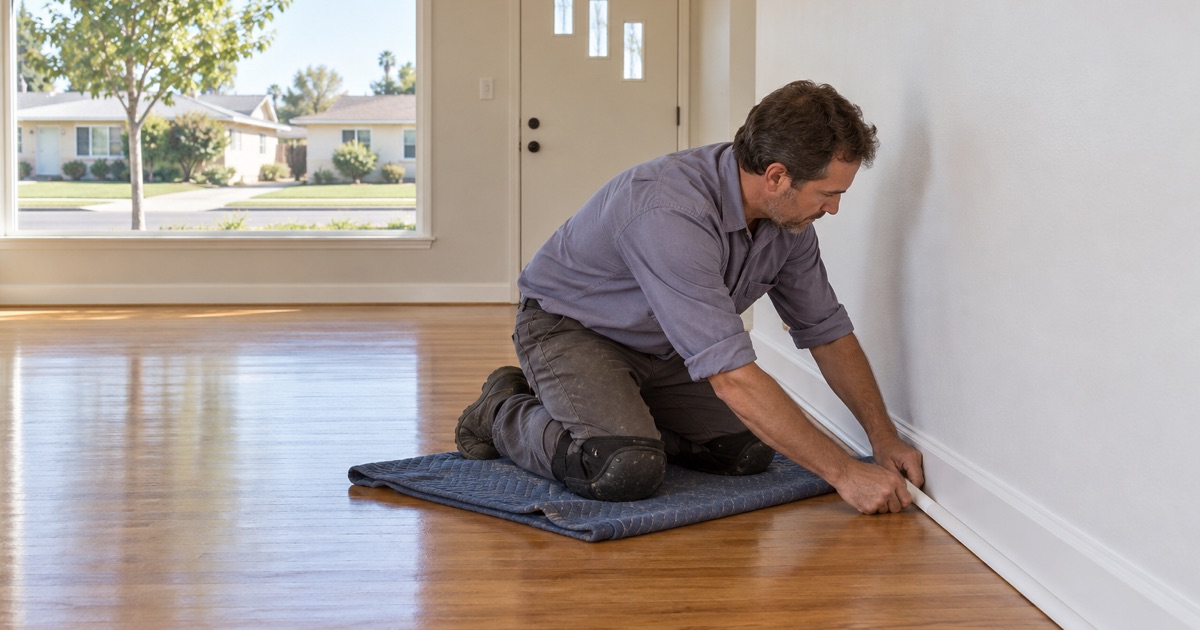
Worker pressing new shoe molding into place along a refinished hardwood floor before a Lakewood house is listed.

Wet Floor Insurance Claims

After a leak, an insurer expects documentation of the cause, the extent of the damage and the repair scope. We trace the source, photograph the damage, record moisture readings over time, and write a scope an adjuster can compare against their own inspection.

Line-by-Line Estimates for an Adjuster

The California Department of Insurance claims guide tells homeowners to ask for estimates broken out line by line, and 10 CCR 2695.9 sets standards for how claims estimates are handled. We write every job that way, so the adjuster can see materials, labor, removal and refinishing as separate items.

Lakewood Home Improvement Loan and Floor Repairs

The City of Lakewood’s rehabilitation loan for eligible owner-occupants lists flooring repair or replacement among covered improvements, alongside termite repair. We provide the written estimate the application needs, while the city decides who qualifies and how much.

Floor Work Before Listing a House

Refinished floors are one of the first things buyers notice in a listing photo, and a screen and recoat or full refinish often costs less than replacing carpet. We schedule work to leave enough time for the finish to cure before staging and photography, so the listing is not delayed by soft finish.

Turning Over a Rented House Between Tenants

Between tenants, a landlord needs to separate normal wear from damage and decide what to repair before the next lease. We document the floor’s condition, recoat or repair what is needed, and write it up clearly, which helps when a security deposit decision under Civil Code 1950.5 follows.

Subfloor and Joist Repair After a Leak or Termites

Water damage and termite damage often reach past the finish floor into the plywood underlayment, the board subfloor, or the joists themselves. We open the floor, cut out damaged subfloor, sister joists where it is a flooring-scale repair, and rebuild a solid base before new wood goes down.

Condo and HOA Rules for Hard Floors

Many condominium associations regulate hard flooring because of noise between units, and Civil Code 4760 addresses owner alterations in common interest developments. We review your association’s rules for sound underlayment and approval steps before installation, so the floor you choose is one the HOA will accept.

Refinishing and Replacing Stair Treads

Stair treads take the heaviest wear in the house, and worn nosing or loose treads are a safety concern. We refinish or replace stair treads and risers, price each tread and riser as its own line rather than folding them into a square-foot number, and match them to the floors they connect.

Areas We Serve

Lakewood Wood Flooring provides wood-flooring throughout the greater Lakewood area, with the same crews and the same standards on every job.

Good to know

Frequently Asked Questions

What does it cost to refinish hardwood floors in the Lakewood area?

Published Los Angeles-area guides put a full sand and refinish at roughly $4 to $8 per square foot, with stain adding about $1 to $3, while a screen and recoat runs closer to $1 to $2. We price your floor from its measured square footage, its condition and the finish you choose, and we write every line out so you can see where the number comes from.

How long does a typical refinishing job take?

Most whole-house refinishing jobs on a Lakewood tract home take several days: sanding, any stain, then the finish coats with drying time between them. The finish you choose sets the pace, since waterborne polyurethane dries faster between coats than an oil-modified product. We hand you a written cure schedule before we start so you know which rooms open on which day.

Do you check for asbestos before removing old floor coverings?

Yes. Kitchens in the original Lakewood Park houses were sold with inlaid linoleum and bathrooms with rubber tile, and 9x9 tile and black mastic from that era can contain asbestos. We treat those layers as an open question until an asbestos survey answers it, and nothing is scraped or sanded before then.

Is lead dust a concern when sanding an older floor?

It can be. The EPA Renovation, Repair and Painting rule applies to housing built before 1978, and the EPA dust-lead action level for floors dropped to 5 micrograms per square foot as of January 12, 2026. We follow lead-safe work practices on pre-1978 houses, which covers nearly every home in Lakewood.

Which finishes can be used on floors in Lakewood?

Lakewood sits in the South Coast air basin, where SCAQMD Rule 1113 limits wood coatings to 275 grams per liter of VOC. We choose waterborne polyurethane, compliant oil-modified products and hardwax oils from the list that meets that limit, so the finish on your floor is legal to apply here.

Can you work on a floor after a leak while an insurance claim is open?

Yes. We trace the water to its source, record moisture readings and photographs, and write a line-by-line estimate, which is the format the California Department of Insurance tells homeowners to ask for. That gives your adjuster something concrete to compare against their own scope.

Should I choose solid or engineered hardwood?

Solid hardwood suits a raised foundation with a sound board subfloor and can be sanded many times over its life. Engineered hardwood is often the better choice over a concrete slab or where moisture is a concern, and its wear layer thickness decides how many future refinishes it can take. We test the substrate first and recommend from the readings.

Do you repair floors or only replace them?

Repair comes first whenever the wood allows it. Damaged boards can be cut out and new ones woven into the existing floor, squeaks can be fastened down from above or below, and a worn finish can often be screened and recoated. We recommend replacement only when the boards or the subfloor beneath them cannot be saved.

Can I use Lakewood's home improvement loan for floor work?

The City of Lakewood's Single-Family Residential Rehabilitation Loan lists flooring repair or replacement among the improvements it covers, for eligible low-income owners who live in the home. The city decides eligibility; our part is providing the written estimate the application process needs.

How long should new flooring acclimate before installation?

There is no single number of days. Acclimation is finished when the moisture content of the new boards sits within the range the manufacturer and the NWFA installation guidelines call for relative to the subfloor. We measure both with a wood moisture meter and write the readings down before the first board goes in.

Ready to Get Started?

Request a free quote today and we'll get back to you fast.